Curious about all the different types of clothing patterns? This guide will give you an overview of them!
Today, so much of our shopping is done online. This makes it more important to understand what clothing and fabric descriptions really mean since we often can see items in person before purchase.
You would be asking yourself questions like, “How heavy is the fabric? Is it stiff or pliable? What does the fabric look like up close? Are there colors involved that I’m not seeing?”
This guide will describe much of the terminology commonly used. Some terms describe the fabric weave or pattern, while others are an indication of quality and exclusivity.
The same weaves and patterns may be found in multiple fabrications (heavy wool for coats or light cotton for shirts) yet the basic construction is the same even when the end result is very different.
Hopefully, these explanations will help you navigate the sometimes-confusing language used to describe clothing.
Note: some of the following patterns were difficult to find images for. Sorry for the inconvenience!
Tweed
Tweed refers to fabric made of rough woolen fibers rather than any particular pattern (houndstooth or plaid) or weave (twill or herringbone).
To make an analogy: heavy jeans and a fine handkerchief can both be made from cotton, yet the different weaves and weights of fibers used create very different results.
You’ll often find tweed used for outerwear, sport coats and vests, and occasionally suits meant for outdoor events. One great thing about tweed is that it can hold up to cold, wet weather.
The fabric is flexible and casual — pairing well with jeans, chunky sweaters, cable knits, and boots.
You won’t want to wear the average tweed next to your skin without a lining because it’s often too rough. There are, however, some exceptionally fine tweeds that make good suiting material.
Harris Tweed
Harris Tweed is among the finest of tweeds. It must meet exacting standards set by Scottish law in the Harris Tweed Act of 1993. Yes, Harris tweed is governmentally regulated and approved.
To meet this standard, the wool must be sheared from Blackface sheep, spun, dyed (using 60 natural dyes from local plants and lichen), blended, carded, and woven by hand on treadle-powered looms in the homes of Scottish Highland crofters who live in the Outer Hebrides.
Looms and weaving knowledge have been handed down through generations since 1763.
If all requirements are met, the fabric will be awarded and stamped with the Harris Authority Trademark Orb. You’ll either see the above label, or the logo stamped onto the fabric itself if you are buying yardage for custom clothing.
You’ll find Harris Tweed in many patterns and color combinations such as herringbone, windowpane, or houndstooth.
When you purchase authentic Harris Tweed, you know you are getting a product that is long-lasting, sustainable, handmade, and of the finest quality. You can find more information at harristweed.org.
Donegal Tweed
Donegal is another fine tweed, even softer and more comfortable than Harris Tweed. It’s made in County Donegal, Ireland using natural dyes that reflect the local environment and moderate weather which is perfect for raising sheep.
Iconic Donegal fabric is woven with differently colored warp and weft threads (vertical and horizontal) with small pieces of colored yarns woven in at irregular intervals to produce a heathered or flecked effect.
In addition to the plain weave, you can also find herringbone and plaid Donegal tweed. You can find Donegal tweed at Magee 1866 or Murphy of Ireland.
Plaids, Tartan, & Madras
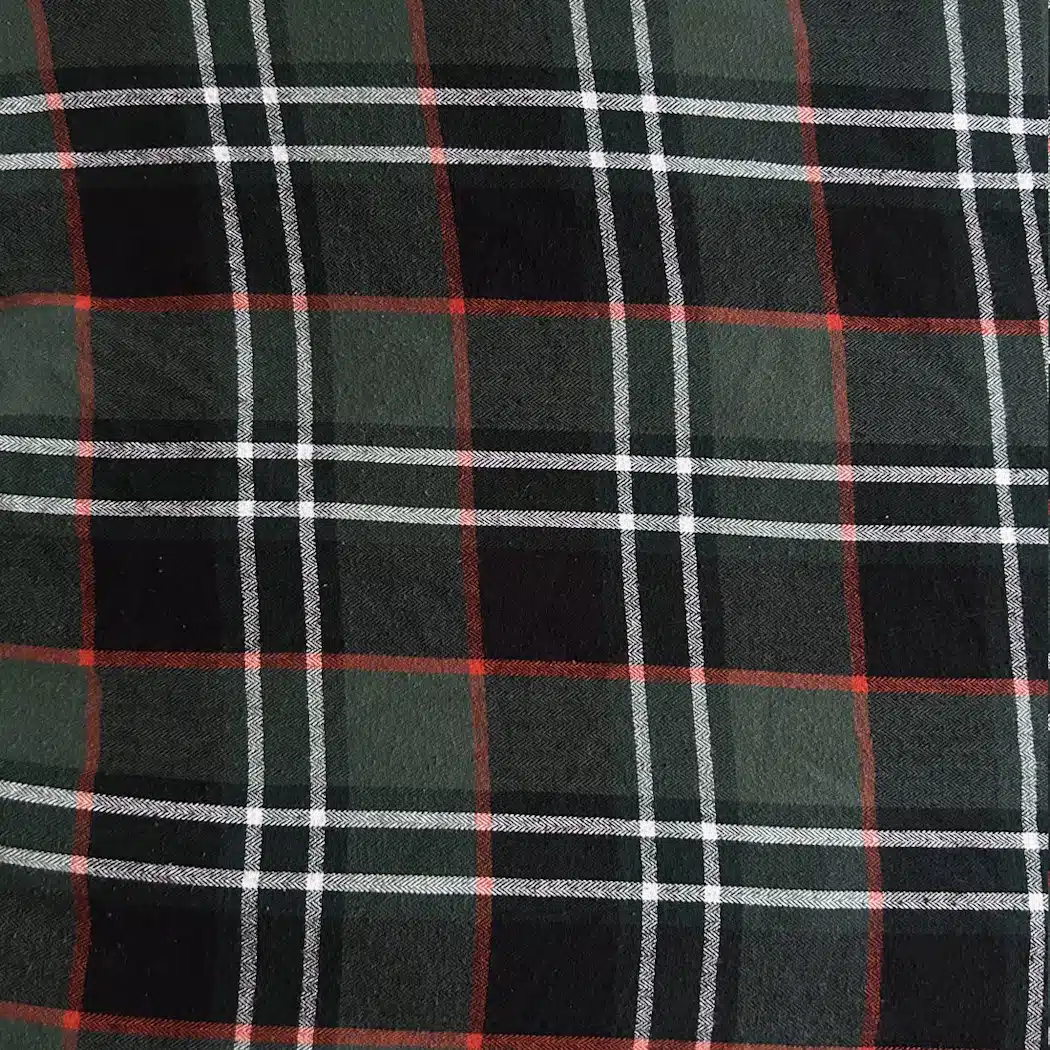
A plaid pattern is created when differently colored horizontal and vertical yarns cross each other at right angles creating square or rectangular shapes. Where the two colors intersect, a new intermediate or complementary color is created. Tartan and Madras are types of plaids.
Any fiber can be used to create a plaid; wool is usually used to create a tartan, and (officially) only Indian cotton can be used to create Madras plaid.
The word “plaid” is Scottish Gaelic and originally referred to a type of cloak/blanket or woolen scarf that would be draped over the left shoulder of Highland shepherds during the day and then used as a warm blanket at night. Plaids have existed for well over 3,000 years.
Tartans
While all tartans are plaids, not all plaids are tartan.
Tartan plaids have a repeating pattern of a 5-6” basic building block. To use the term “tartan” the plaid must be officially recognized in Scotland through a registration process or historically associated with one of the original 33 Highland clans.
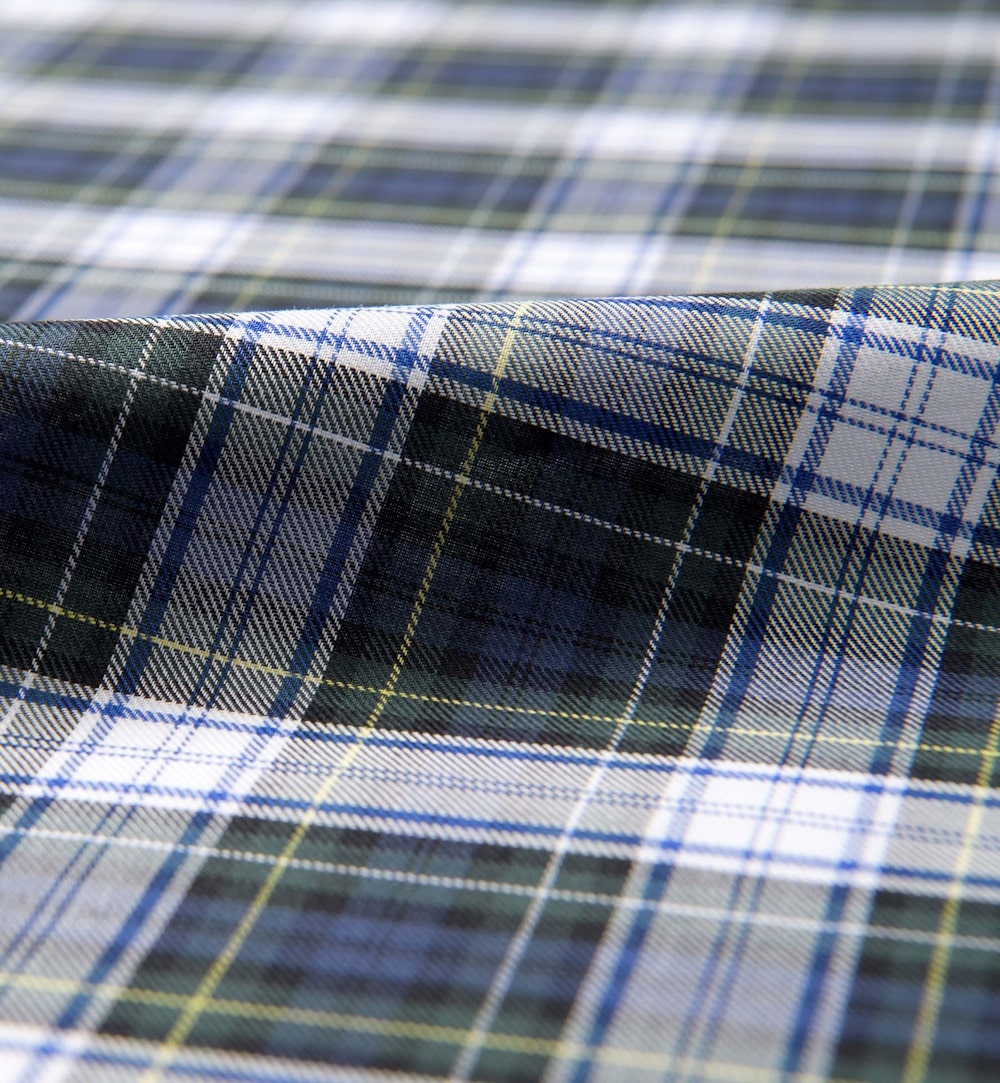
Today there are more than 4,000 recognized patterns in The Scottish Register of Tartans.
Unless a pattern is officially recognized, you are wearing plaid, not tartan. There are a number of companies that will help you research your heritage and create a family tartan.
While older, traditional tartans, including the Black Watch tartan, the official uniform of the Royal Highland Regiment from the mid-1700s until the disbandment in 2003, are muted, more modern tartans use vibrant synthetic dyes.
Today, the most popular tartan is the Royal Stewart pattern that was designed for Queen Victoria and was also the official tartan of Queen Elizabeth II.
Companies have used tartan plaids to help create a brand identity. Burberry created their now-classic plaid to line their trench coats in the 1920s and 3M uses the Clan Wallace plaid.
Madras
You may think that going from Scottish wool tartan plaids to Indian cotton Madras plaids would be a huge leap, but their histories are actually intertwined.
In the 1600s, the East India Company enticed 400 Scottish weavers to come to India to produce cotton plaids for export. The descendants of these weavers are still there producing Madras plaids.
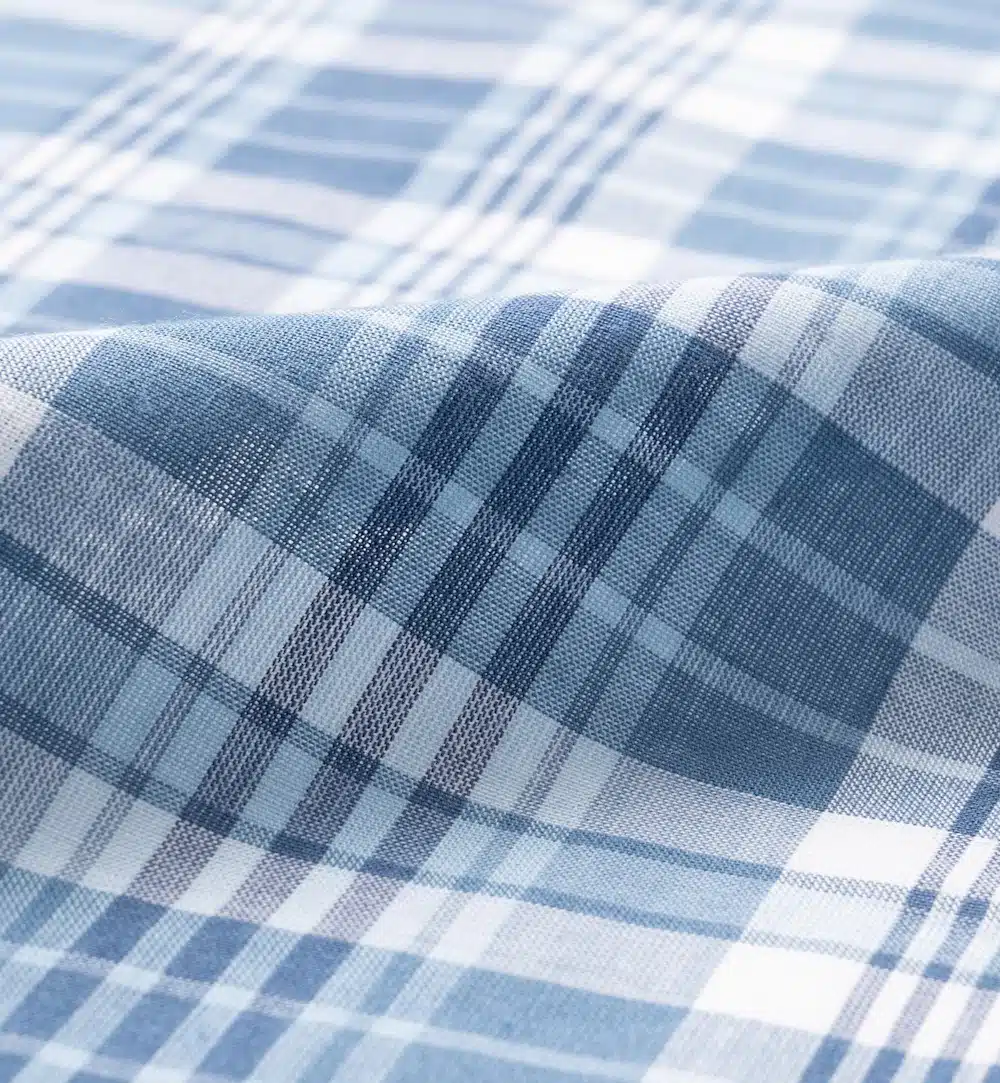
There are a couple of things that differentiate Madras fabric from other cotton plaids. First, the US Federal Trade Commission requires that the fabric must be manufactured in Chennai, (southern) India from indigenous cotton.
The term Madras evolved from the region’s previous name — Madraspatnam. The short, staple cotton creates a cool fabric that has slubs.
The hand looms are used to create identical patterns on both sides of the fabric. The resulting slight flaws shouldn’t be viewed negatively, they indicate that Madras is handmade.
Plaids of all sorts have been adopted by everyone from preppy devotees, to the grunge and punk scenes, and everyone in between. If you want to show your plaid support, World Plaid Day is the first Friday in October.
Checks: Buffalo, Gingham, Houndstooth, Tattersall
Technically, checks are plaids, but they feature only two yarn colors that are evenly spaced both horizontally and vertically. Where the two intersect, a third, more intense color is created.
Gingham
Gingham checks have a white background and often red, blue, yellow, or green checks. Its origins aren’t clear but it was popularized by the English and Dutch for export and was later manufactured in colonial America.
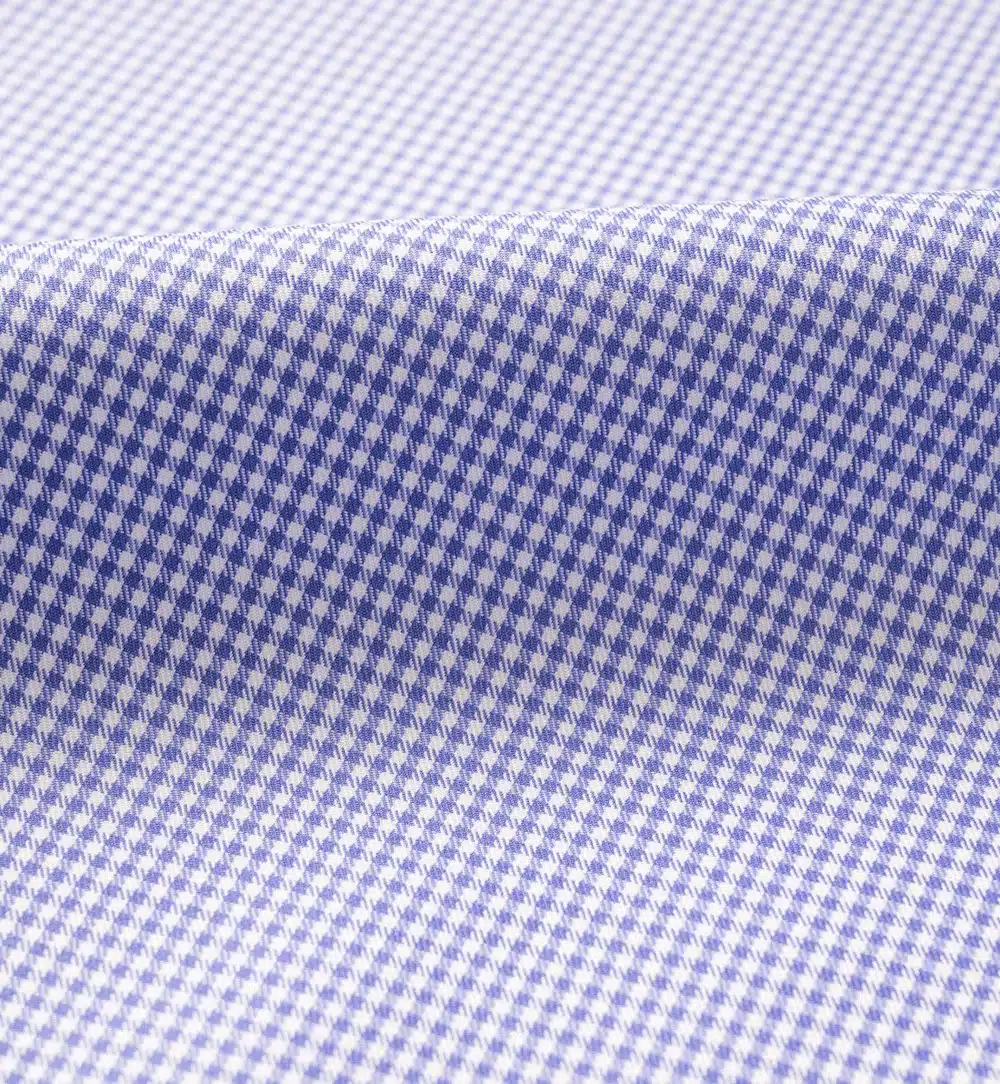
This cotton fabric is cool, durable, and inexpensive. Like Madras plaid, the front and back of the fabric are identical. Gingham check casual shirts are a timeless standard.
Buffalo Plaid
When you trade out the white for black and the blue for deep red and increase the size of the checks, you have classic buffalo plaid.
This plaid is the historical tartan of the MacGregor clan, registered to them in 1704. It’s also called the Rob Roy (MacGregor, the Robin Hood of Scotland) tartan.
The pattern was popularized in the mid-1800s either as a trade item for buffalo robes or by the founder of the Woolrich Woolen Mills who sold shirts in the lumber camps of Pennsylvania.
It was used as a marketing campaign to promote the myth of Paul Bunyan. Woolrich is still making their classic buffalo plaid, but you can also find vintage shirts and jackets on sites like EBay or Etsy.
There are a couple variations of gingham checks and buffalo plaid that are worth noting:
Shepherd’s Check
Shepherd’s check is basically a gingham check in a twill weave. The diagonal lines of the weave intersect the squares and lines of the pattern making it more complex. The check still uses a single color on a white background.
Gun Club Checks
Gun Club checks evolved in the west Highland areas of Scotland and were adopted by the American Gun Club for their coats in 1874.
The 4 colors of the highlands (black, rust, gold, and green) in a twill weave help create camouflage. Gun club checks are usually done in shades of browns or blues today.
Houndstooth
Houndstooth is a broken check that has an irregular shape instead of a perfect square. It’s created when the yarn goes over two threads and then under two threads.
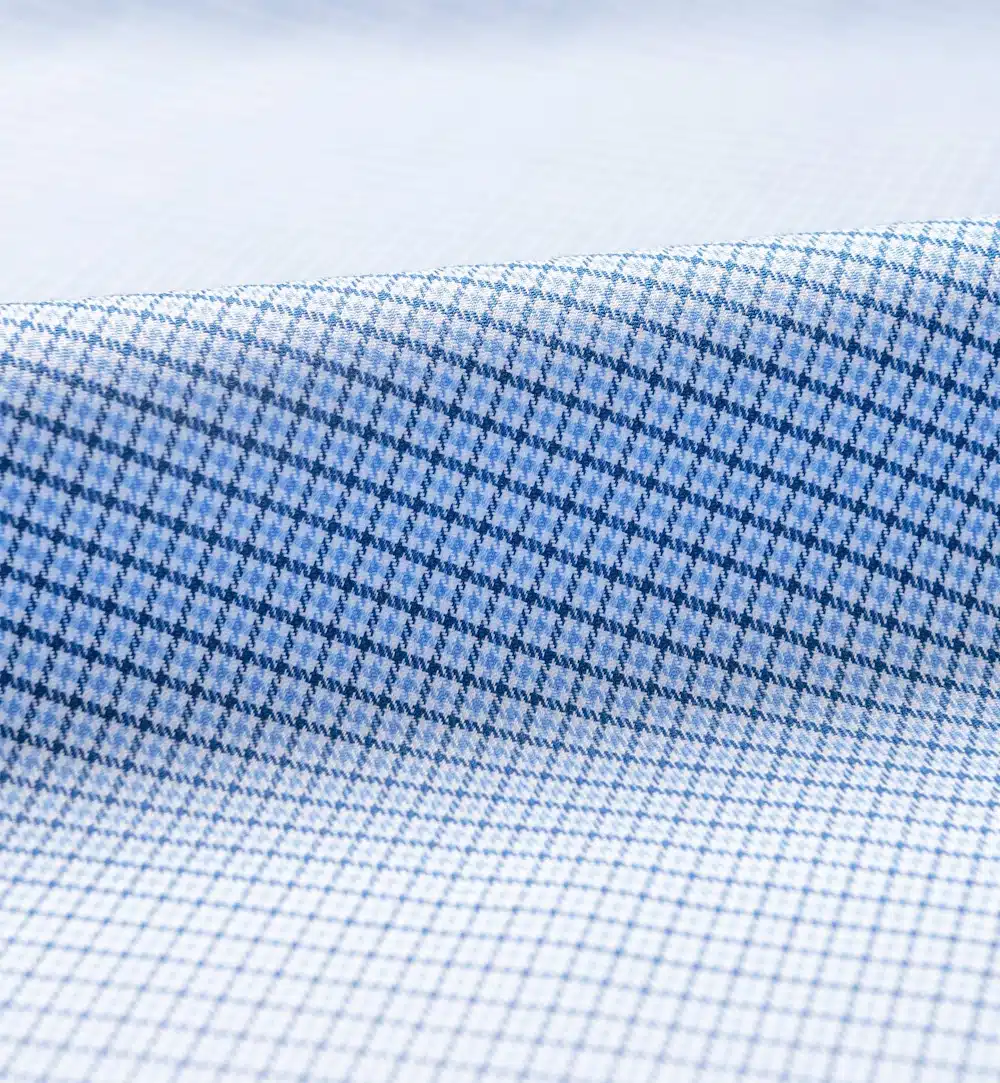
Classic houndstooth uses 4 threads of each color before repeating. There are no traditional colors for this pattern and even the size of each square can be increased.
Hybrid Patterns: Glen Plaid, Windowpane, Tattersall
There are some hybrid patterns that combine multiple types of plaid or an overlay to a plaid.
Glen Plaid
A careful examination of the complex Glen plaid shows that part of the pattern is actually a houndstooth.
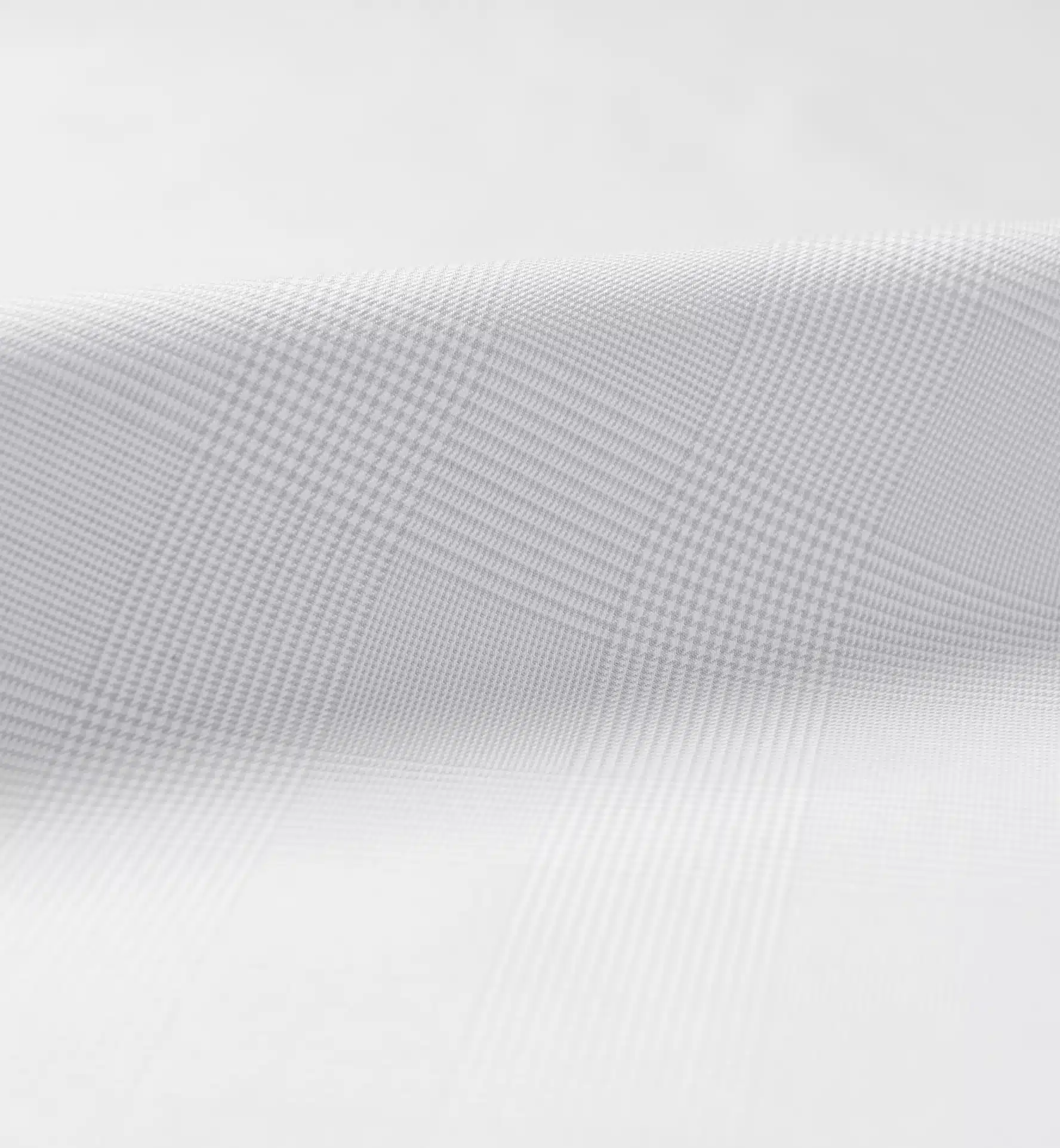
When Glen plaid is done in very fine wool with small patterns, seen from afar it will almost look like a textured solid. It can also be made with wool flannels and tweeds to form a larger, more visible, pattern.
Glenurquhart Check
Many Glen plaid patterns are overlaid with a windowpane check in a contrasting color. This is called a Glenurquhart check.
The colored over-plaids of Glenurquhart checks make it easy to coordinate shirts and ties to create striking and elegant looks.
Unfortunately, it can also reduce the number of distinct outfits you can create from a single suit because you’re limited by the color.
When used in shirts, Glen plaids look almost like a textured solid. It’s a subtle way to introduce patterned interest without becoming too busy.
Windowpane
When you take away the Glen plaid part of Glenurquhart, you’re left with a windowpane pattern. This is exactly what it sounds like — squares or rectangles made of thin(ish), widely spaced vertical and horizontal stripes that resemble window panes.
Tattersall
Tattersall check is similar to a windowpane except it has two or more complementary colors instead of just one. The lines can be different thicknesses, clearly defined or muted, single or double, but they always create uniform squares.
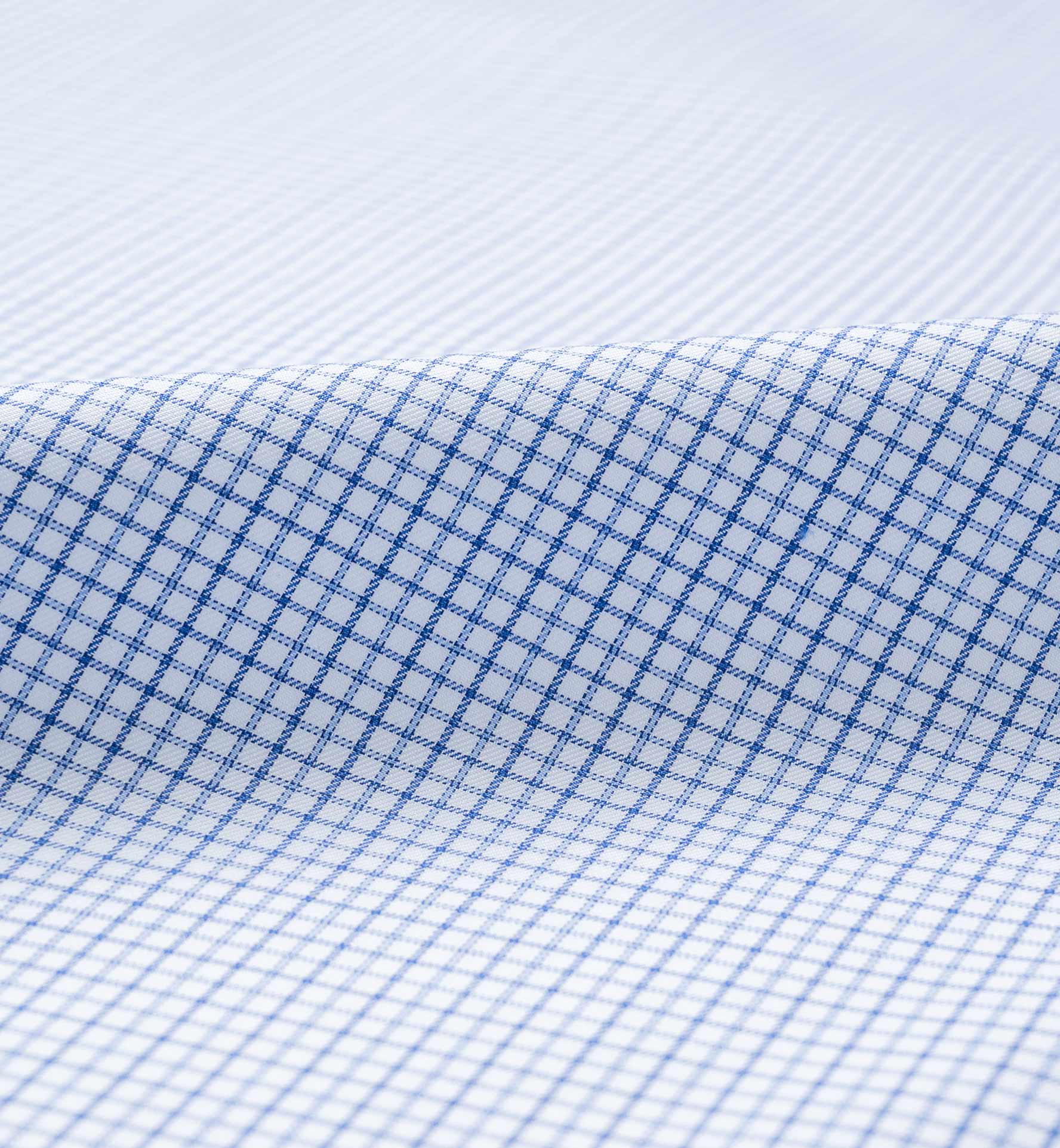
You’ll often see tattersall used in shirts (both flannel and dress shirts), but also in suits and sport coats.
The dual colors, in addition to the background color, makes this a great pattern for matching accessories.
Stripes: Herringbone, Pin, Chalk, Seersucker
The following patterns and weaves are derived from stripes:
Herringbone
Herringbone isn’t technically a stripe, but a weave that creates a vertically oriented pattern that can be done in flannel, tweed or cotton shirtings.
It’s a distinctive v-shaped, almost chevron pattern of slanted lines that alternate directions between parallel bands and can be done in a solid or 2 color version.
Herringbone is an ancient design and can be found around the world on Bronze and early Iron Age artifacts, North American basketry, and Roman roadways. The name’s origin is due to the resemblance to the skeleton of a herring fish.
Herringbone can have a distinct pattern like the swatch above, or become muted by choosing two similar colors (dark and lighter shade), using a fuzzed fabric that blurs the markings, or having a very narrow repeat.
In fact, if you just want to create texture without the distraction of multiple colors, choose a solid color herringbone and create a non-solid solid. This is especially effective on suits and tuxedos and fine dress shirts. Not only will the fabric look more luxurious, but the weave also helps shed wrinkles and dust.
Pinstripes
Pinstripes is one of the most common patterns for shirts and suits. It’s created by evenly spaced strips, often white, that helps elongate the silhouette and bring some interest to the garment.
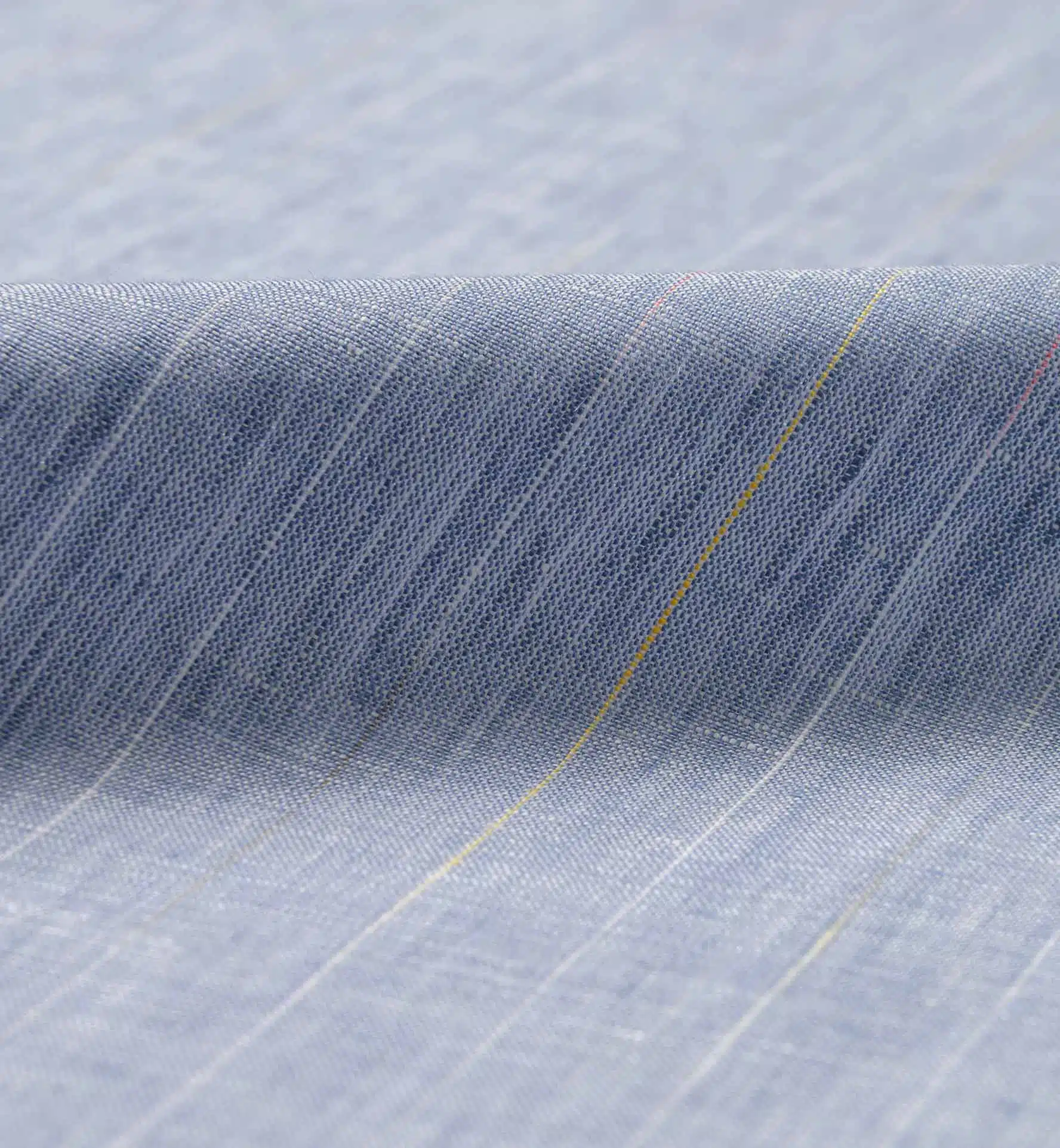
The thinner the stripe, the more the eye will be drawn away from the wearer’s midsection.
Chalkstripe
Chalkstripe is similar to pinstripe – on steroids. The stripes are thicker, further apart, and less well-defined than pinstripes.
The shirt in the photo above is a pinstripe worn with a chalk stripe suit. Yes, you can wear pinstripes for both the suit and shirt if you balance the color, width, and frequency of the stripes.
Be aware that chalk stripes can draw attention to your midsection.
Seersucker
Seersucker is more than just two-toned fabric. It’s actually the weave itself that creates the effect of stripes. The warp threads (vertical) are strung at two different tensions.
The colored threads are strung tighter and lie flat, and the white threads are looser and create a slight puckering when taken off the loom.
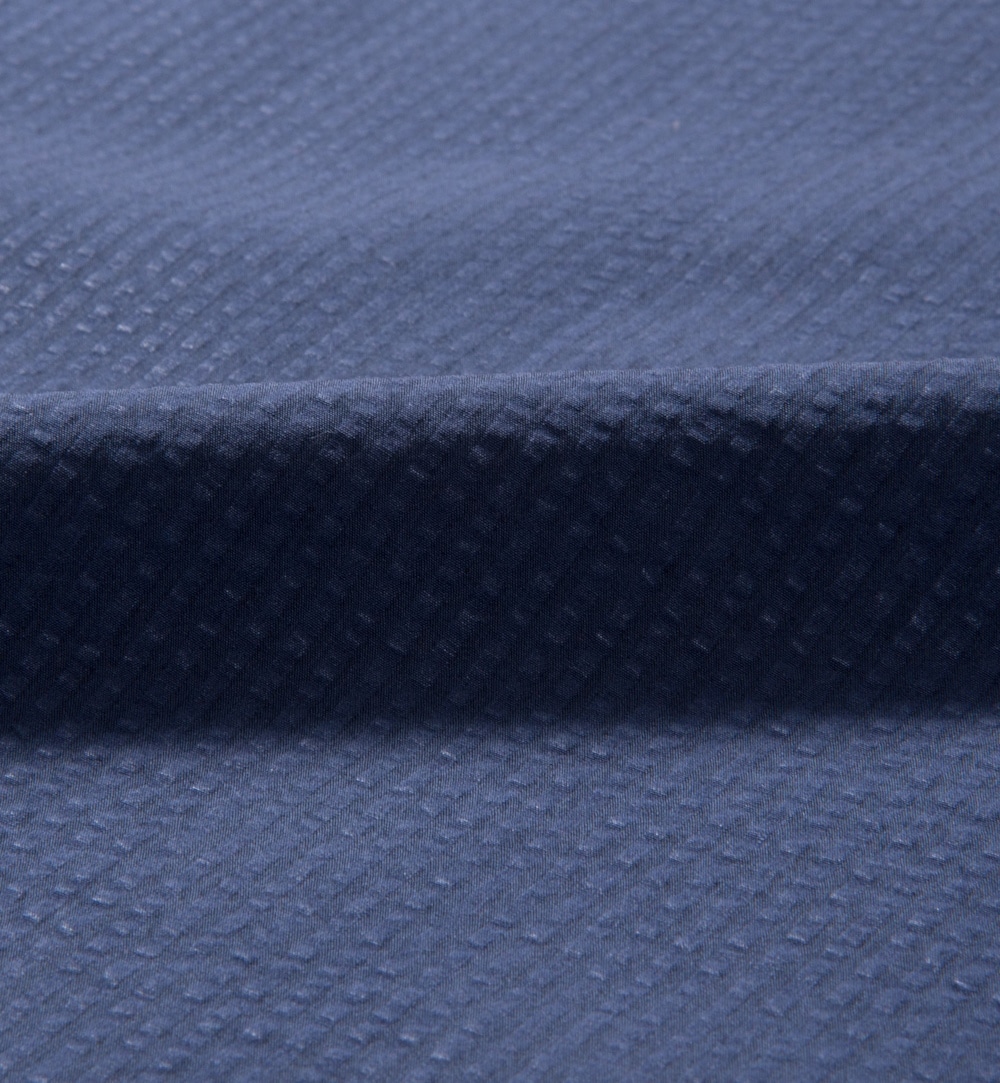
The puckering creates pockets of air that keep the fabric away from the skin making it perfect for hot humid weather. This durable fabric travels well and washes easily.
Most seersucker stripes are light blue, beige, green, or pink with white. While the pastel two-tone version is a classic, you can find seersucker in multiple colors and solids.
The best-known source of seersucker clothing is Haspel.
The US Senate celebrates Seersucker Thursday in June of every year with National Seersucker Day.
Dots: Polka, Bird’s Eye, Nailhead
Moving on from stripes, here are some dot designs:
Polka Dots
Polka Dots originated in Germany in the mid-1800s, around the same time polka music became popular. It’s a pattern consisting of filled circles of the same size.
Most often, men’s clothing (shirts or ties) will feature small dots that are printed, rather than woven in.
Bird’s Eye
Both bird’s eye and nailhead weaves create tiny dots in a 2 colored weave. From a distance, each looks like a textured solid color as the colors blend together. Up close, the pattern becomes apparent.
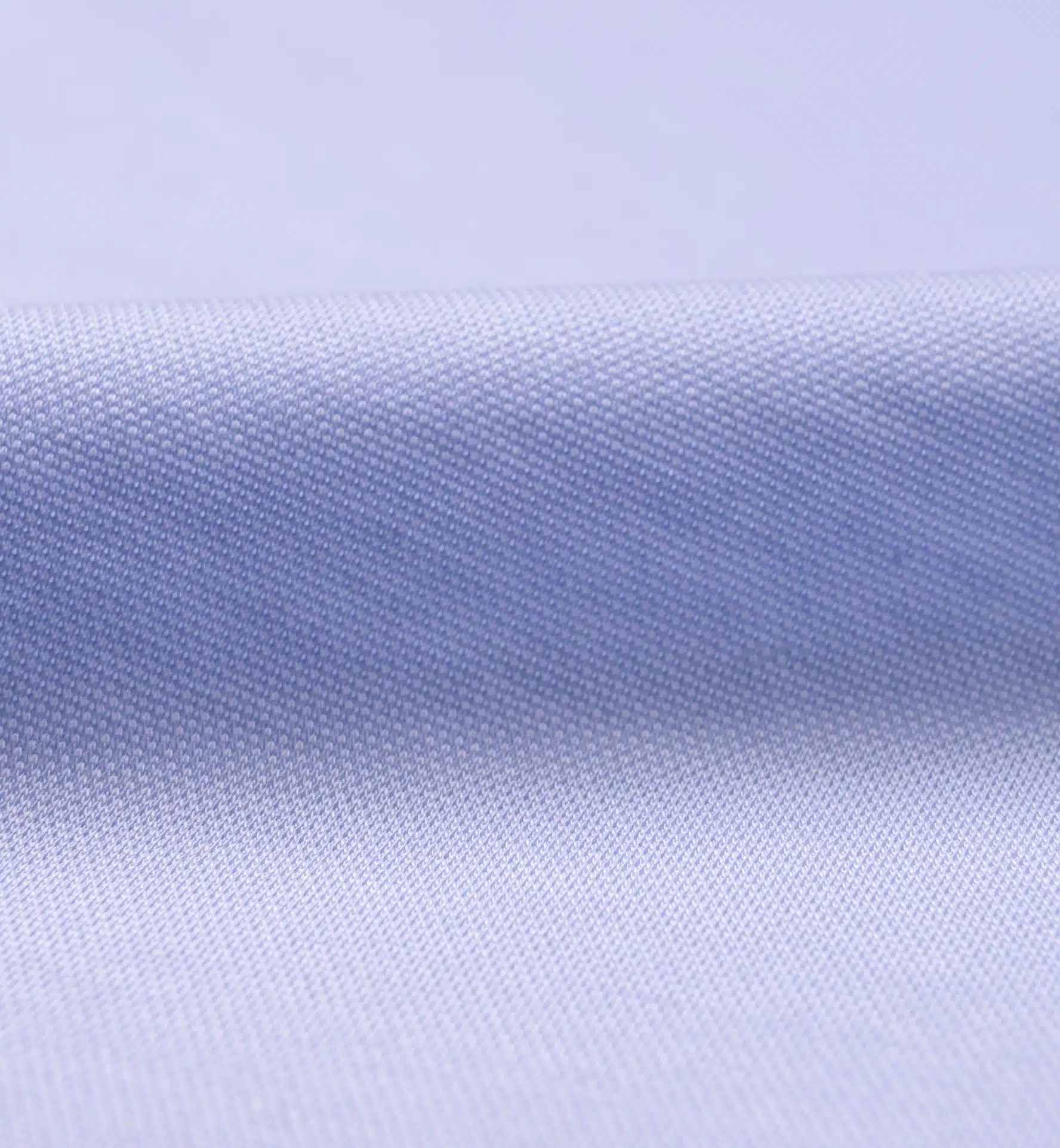
Bird’s eye fabric has lighter colored, rounded diamond shapes that are recessive with the surrounding darker color threads creating a diagonal outlining network. It resembles a honeycomb effect.
Nailhead
Nailhead fabric has squared-off dots that form a micro-pattern that’s only discernible up close. The fabric is flatter than Bird’s Eye with both the dark and light threads resting at the same height. From a distance, it looks like an uneven solid color
In both weaves the final color is somewhere between the two yarn colors used to create it.
Final Thoughts
Learning about weaves and patterns isn’t always exciting, but in today’s internet world of shopping, it’s important.
Since photos only tell part of the story, you need to understand how the fabric may feel and wear.
Knowing what the terms mean will help you make the right decisions before you press the “purchase” button.
What’s your favorite pattern? Let me know in the comment section below!








Ask Me Anything